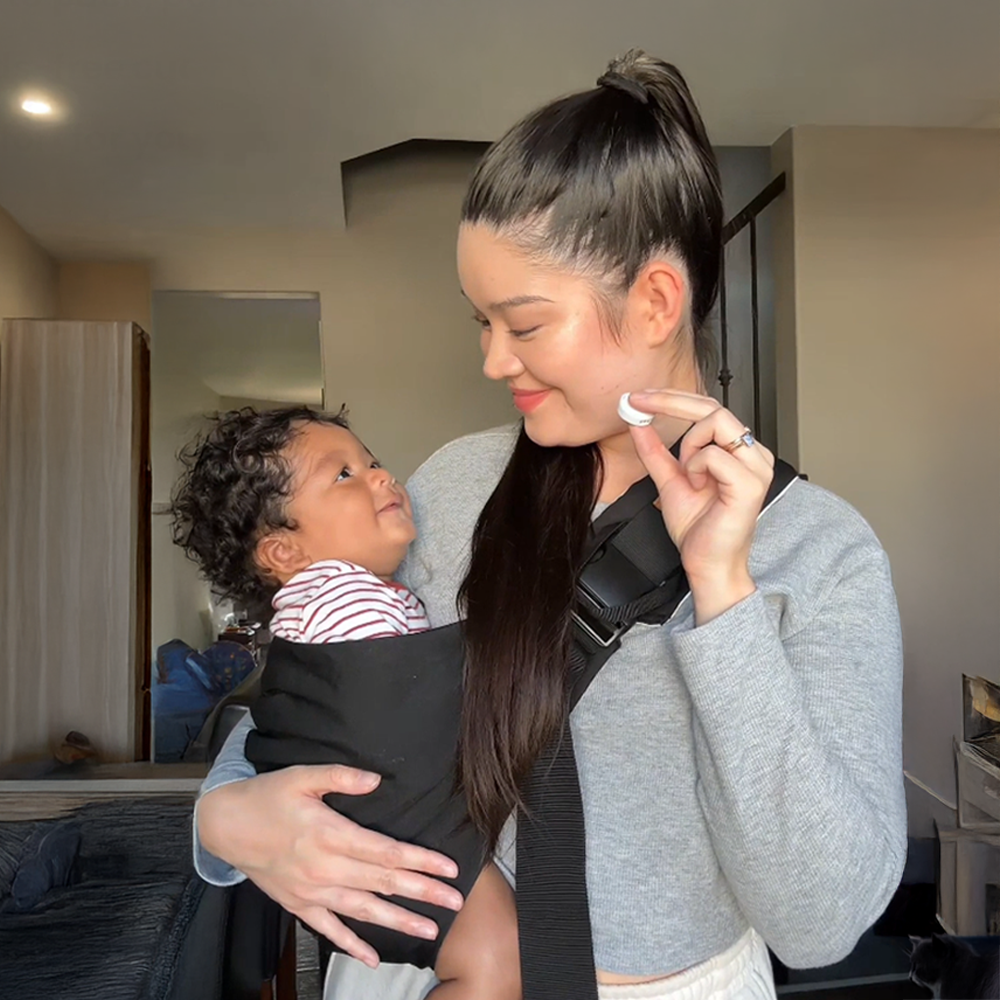
At 64, my father found himself unable to hold his grandson for more than 10 minutes without his back seizing up, wondering when getting older meant missing out on precious time with his grandchildren.
The back pain started first…
Sharp aches that made him hesitate before picking up his grandson.
The arm fatigue that had him passing the baby back after just a few minutes.
Guilt that kept him quiet because he didn't want to admit he couldn't hold his grandchild without his body giving out.
His doctor said it was "normal aging" and suggested he "take it easy."
But what she never told him was that traditional baby carriers put all the weight on your back and shoulders…
Meaning every minute he tried using those complicated structured carriers was actively making things worse.
His body was struggling while precious bonding time slipped away.
Why Traditional Carriers Don't Work for Grandparents
I spent months watching my dad try to bond with his grandson, seeing the frustration when his arms gave out.
One day, another grandmother at the park mentioned she'd found a carrier her husband could actually put on himself.
That comment got me thinking…
And what I realized shocked me…
Occupational therapy research shows 73% of grandparents avoid baby carriers because they're too complicated or cause pain.
Furthermore, physiotherapy studies found that traditional carriers require core strength that naturally declines with age - multiple buckles, constant adjustments, and weight that destroys already vulnerable backs.
What this actually means is that grandparents are missing out on bonding time no matter how much they want to help.
The carriers are too complicated while precious moments with grandchildren slip away.
Each carrier creates problems that families dismiss as "grandpa just can't manage it."
Multiple buckles require help to fasten.
Weight pulls on aging backs and shoulders.
You can't see baby's face pressed against your chest.
Grandparents give up after 10 minutes because their body hurts.
Also, most carriers are designed for parents in their 20s and 30s, with zero consideration for grandparents.